Structured data, Semistructured data & Unstructured Data Classification of Big DataTypes of

What is semi-structured data? Semi-structured data is a type of structured data that lies midway between structured and unstructured data. It doesn't have a specific relational or tabular data model but includes tags and semantic markers that scale data into records and fields in a dataset. Common examples of semi-structured data are JSON and.
Structured vs. Unstructured Data What You Need to Know Twilio Segment Blog
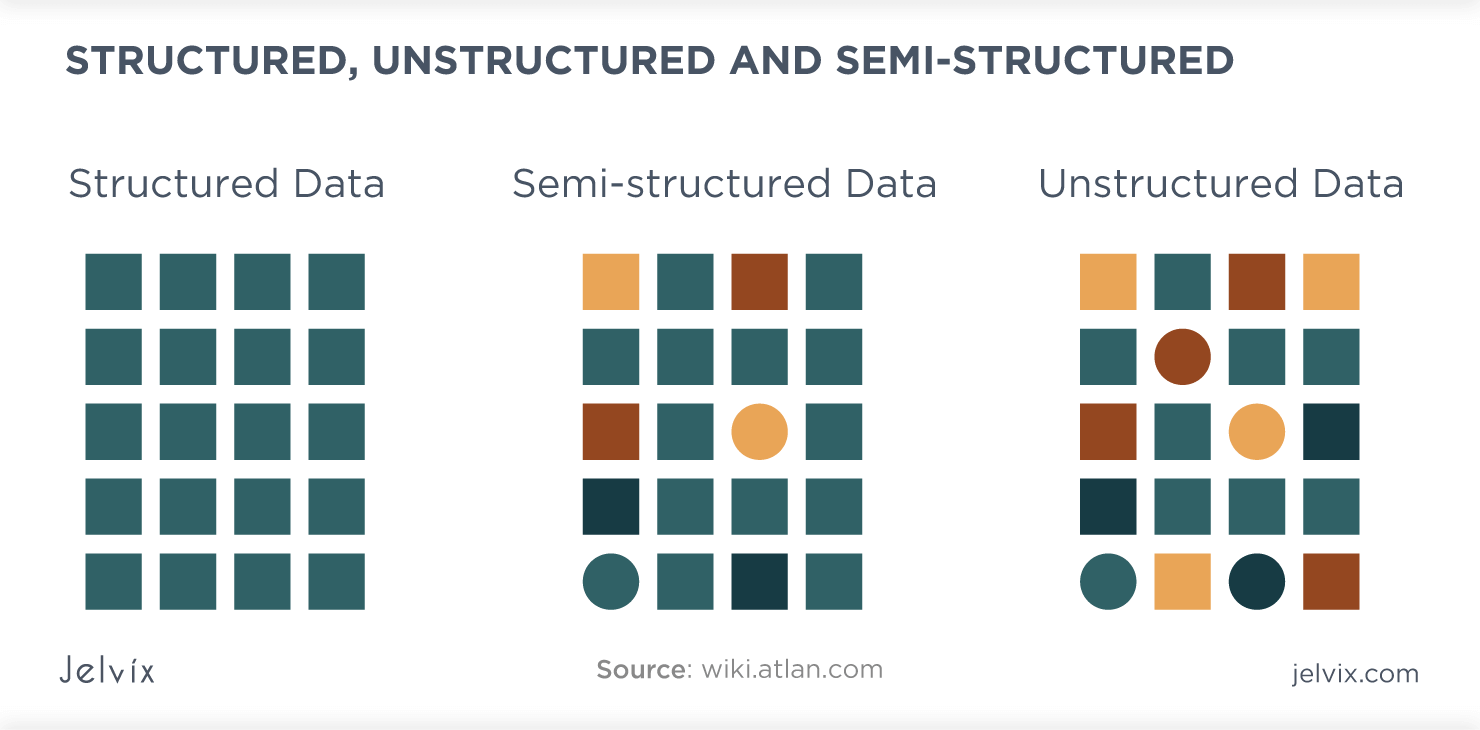
Organization: Structured data is well organized. Therefore, it has the highest level of organization. Semi-structured data is partially organized; hence the level of organizing is lesser than structured data but higher than that of unstructured data. Lastly, the latter category is not organized at all.
Understanding Structured Data A Comprehensive Guide
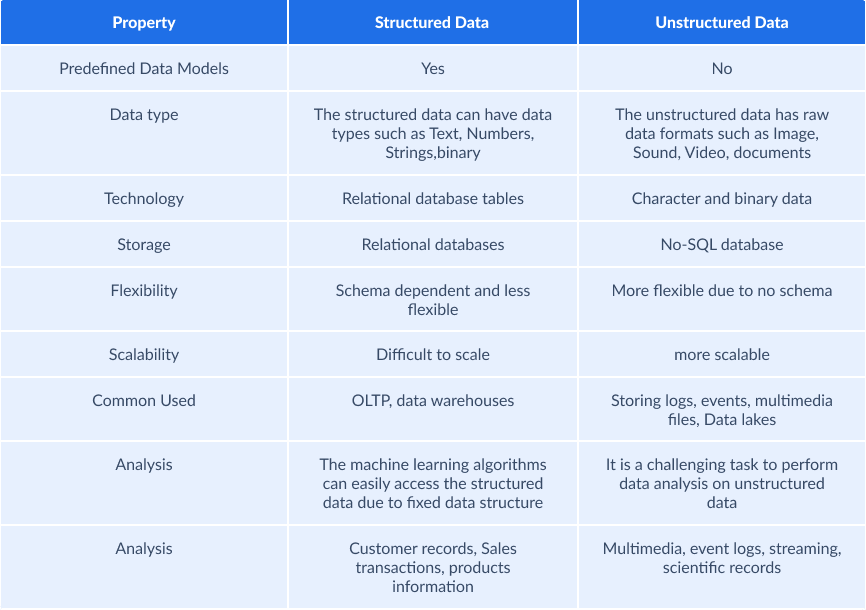
Scaling a Semi-Structured type of data is comparatively much more feasible. An unstructured data type is the most scalable in nature. Performance of Query. A structured type of query makes complex joining possible. Semi-structured queries over various nodes (anonymous) are most definitely possible.
Understanding Structured Data A Comprehensive Guide 101
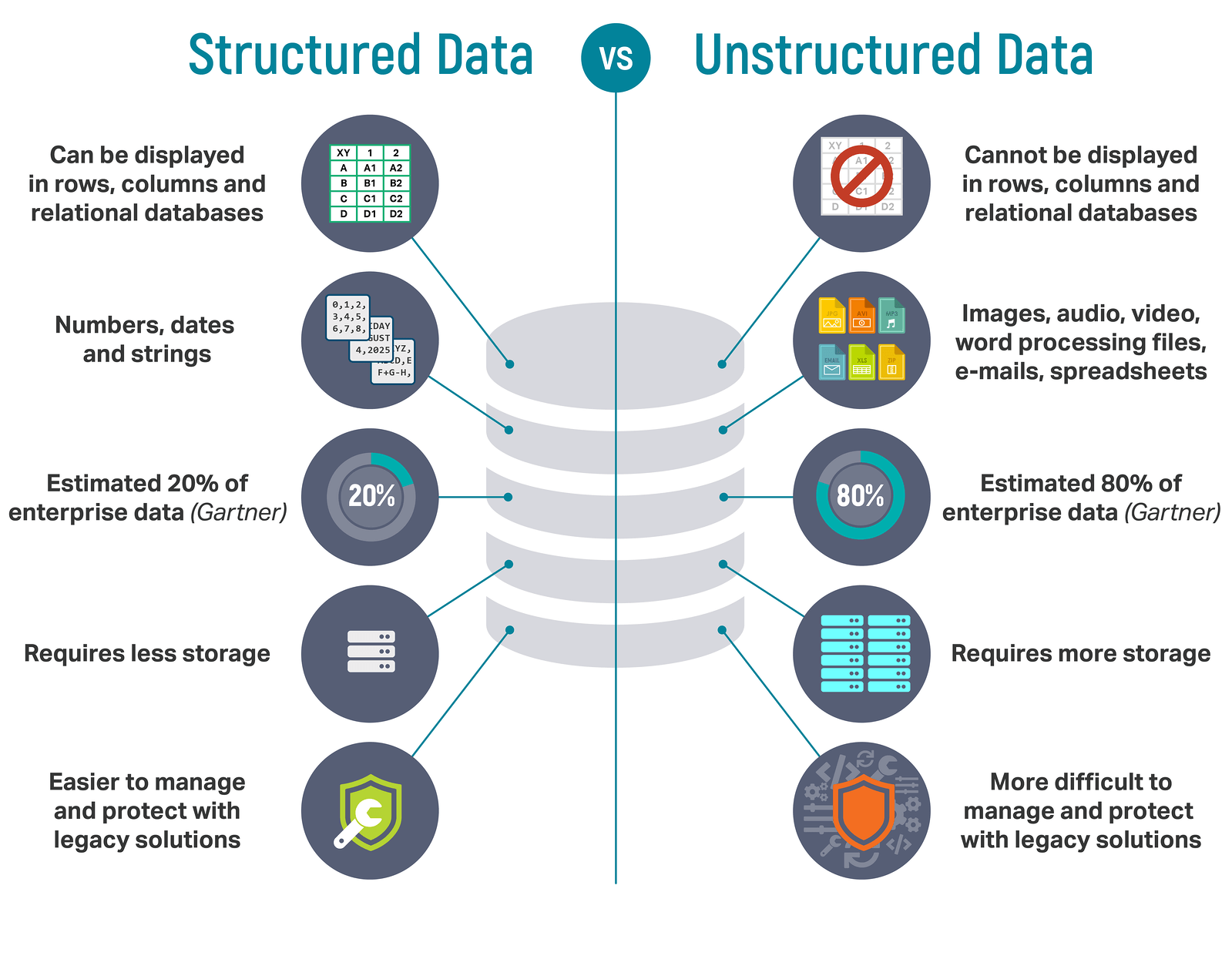
Without an adequate data management strategy in place, your data lake can quickly turn into a data swamp. An effective data management strategy is focused on security, auditability and transparency of structured, unstructured and semi-structured data assets. The data should be governed and classified to securely manage access between relevant.
Structured vs Unstructured Data What Are The Key Peculiarities?
Snowflake for Semi-Structured Data. The Snowflake Data Cloud empowers organizations to benefit from data from a variety of sources, including structured, unstructured, and semi-structured data. Snowflake is ideal for semi-structured data because it enables loading this data without prior transformation, detecting schema automatically while.
Data Types and Applications Structured vs Unstructured Data

Example of semi-structured data vs. unstructured data: A tab-delimited file versus a list of comments from a customer's Instagram. The future of data. Recent developments in artificial intelligence (AI) and machine learning (ML) are driving the future wave of data, which is enhancing business intelligence and advancing industrial innovation.
Different types of big data. Download Scientific Diagram
Semi-structured data presents challenges similar to unstructured data in terms of variability and complexity, yet it offers some level of organization that allows for extraction and interpretation.
Semi Vs. Structured Vs. Unstructured Data Data Solutions Straive

Whereas structured data requires a fixed schema defined in advance, semi-structured data does not require a prior schema definition. For this reason, it can constantly evolve—new attributes can be added at any time. 2. Nested data structure. Structured data represents data in a flat table. In contrast, semi-structured data can contain.
Big Data What Is It and How Does It Work? Business 2 Community
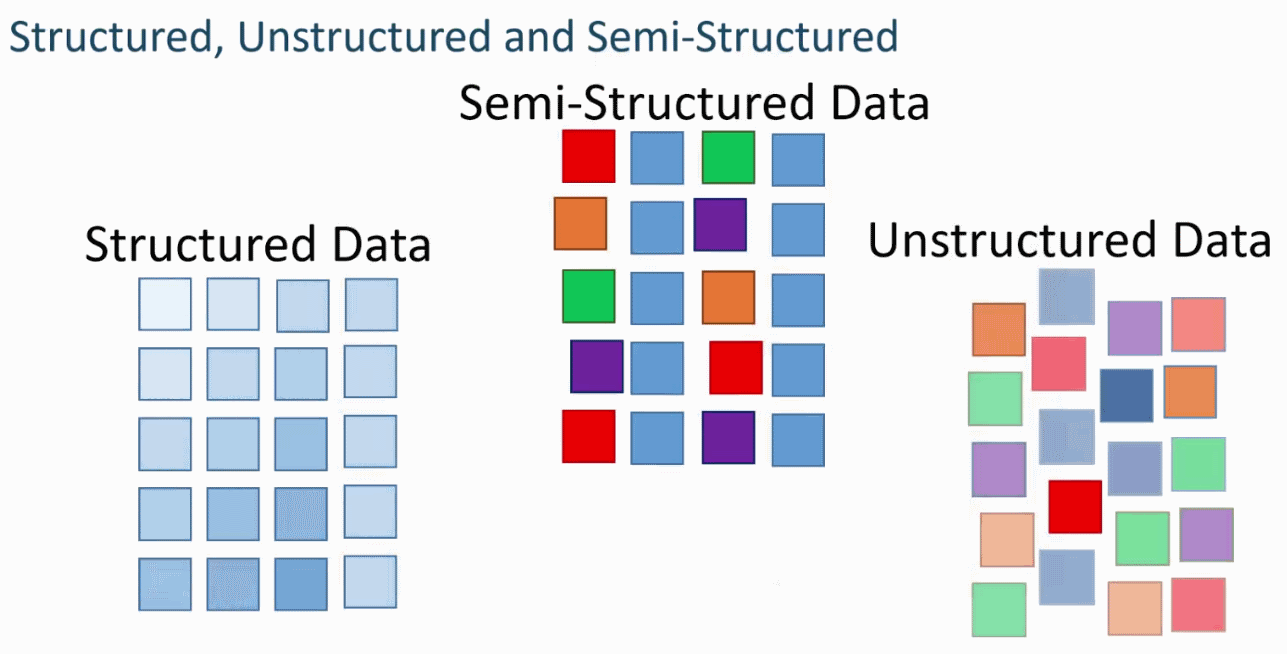
In this lesson, we'll uncover details about Structured, Semi-structured, and Unstructured Data. Specifically, Structured Data has a specific format while Unstructured Data lacks it. Semi-structured Data falls in between the two.
Generate insights with unstructured data extraction Blog
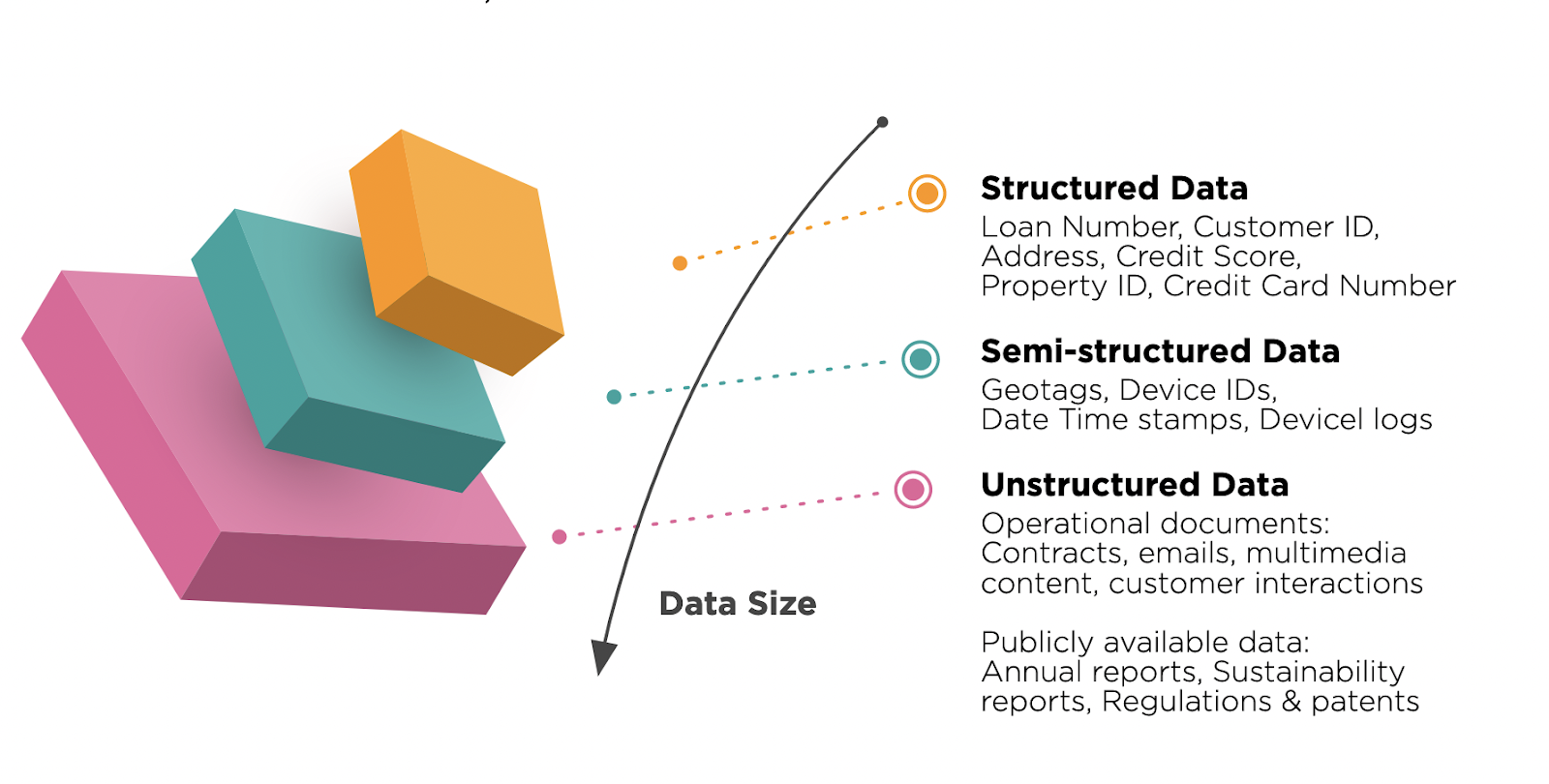
Beyond structured and unstructured data, there is a third category, which basically is a mix between both of them. The type of data defined as semi-structured data has some defining or consistent.
Why data lakes should be at the core of your data management strategy?
Harder to store than structured data: Semi-structured data's lack of rigid, fixed schema makes it more difficult to store than structured data. Less secure than structured data: Semi-structured data can be more challenging to secure than structured data since it may contain sensitive information in less-visible or unstructured parts of the.
Types of Data (Big Data) Studyopedia
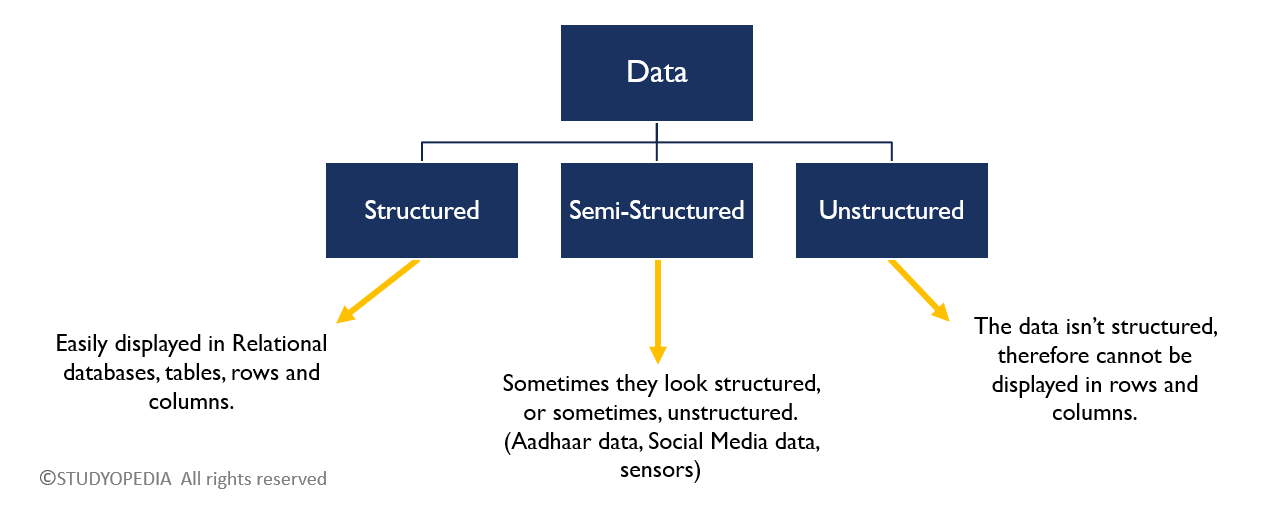
Big Data includes huge volume, high velocity, and extensible variety of data. There are 3 types: Structured data, Semi-structured data, and Unstructured data. Structured data - Structured data is data whose elements are addressable for effective analysis. It has been organized into a formatted repository that is typically a database.
Structured vs Unstructured Data Data Difference, Comparison Table
What is semi-structured data? 7 Key characteristics. Semi-structured data is a type of digital information that does not adhere to the rigid structure of traditional databases or spreadsheets, yet it contains some level of organization and can be processed by computers.. It falls between fully structured data, which fits neatly into tables with predefined schemas, and unstructured data, which.
Data Types and Applications Structured vs Unstructured Data

Semi-structured data cannot be considered fully structured data because it lacks a specific relational or tabular data model. Despite this, it does include metadata that can be analyzed, such as tags and other markers. Semi-structured data is considered more straightforward to derive information and insights from than unstructured data.
Structured Vs Unstructured Data Key Differences In 2021
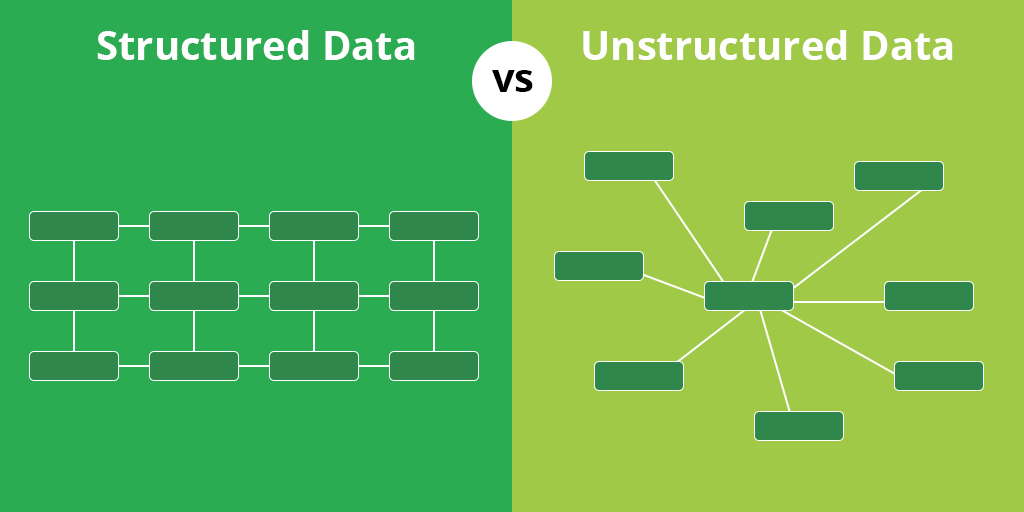
Semi-structured data is a mix of both types of data. A photo taken on your iPhone is unstructured, but it might be accompanied by a timestamp and a geotagged location. Some phones will tag photos based on faces or objects, adding another element of structured data. With these classifiers, this photo is considered semi-structured data.
Structured vs. Unstructured Data What You Need To Know by Kensho Communications Kensho Blog
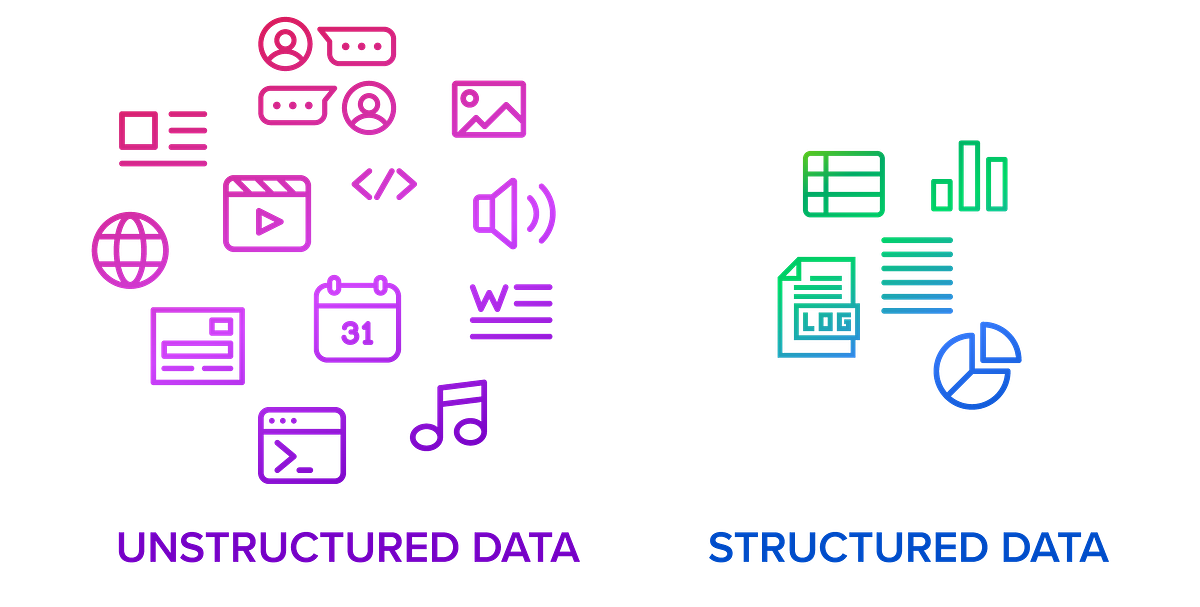
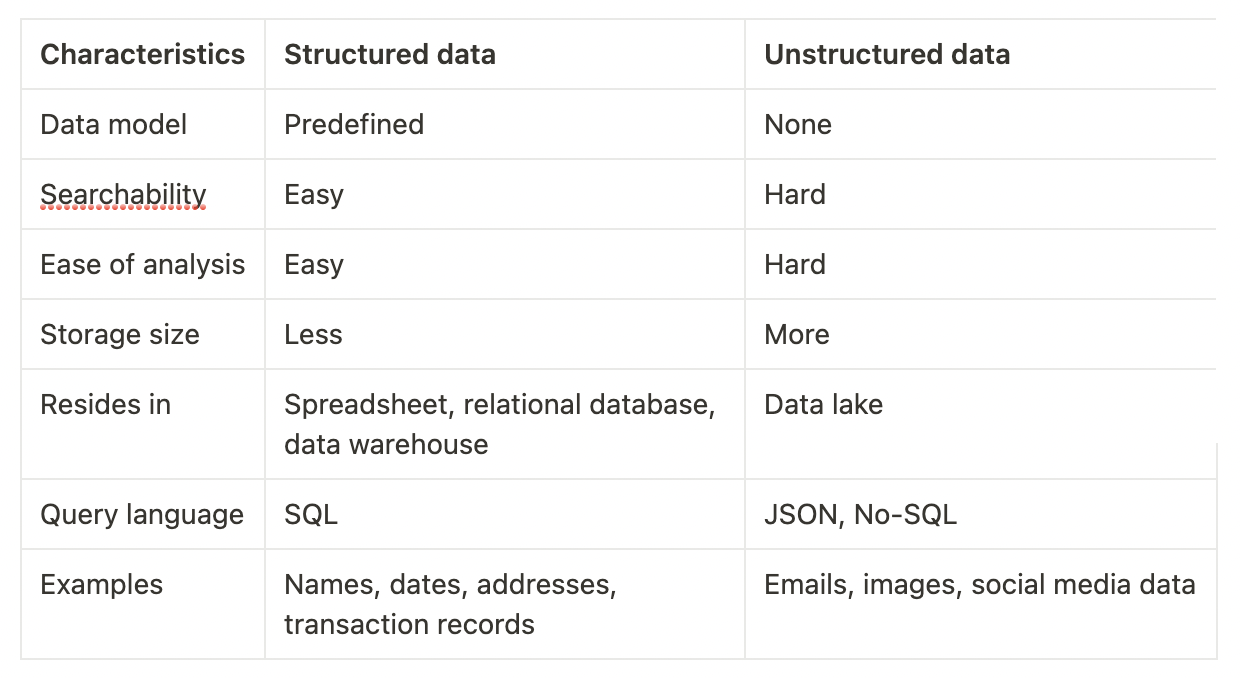
Unstructured data is not processed and unorganized. Data is stored in the form of tables. Data is stored in the form of text, images etc., Structured data is managed using Relational database management system (RDBMS) Unstructured data is managed using NoSQL. Data is highly secured.
.